On the evening of July 23, roughly 250 people packed the Youth Center gymnasium in Greenbelt, Maryland, with more watching by Zoom after the platform hit capacity and had to be expanded. They weren't there for a town festival or a school board debate. They were members of Greenbelt Homes, Inc., the housing cooperative that owns most of Old Greenbelt, voting on whether their corporation should spend roughly $3.5 million to buy the building that houses their own supermarket. The vote passed 580 to 156, a turnout half again larger than any GHI election since at least 2014.
If you're shopping for a home in Old Greenbelt right now, that meeting matters more than the listing photos. Whatever number is on the sign in the yard, you are not just buying square footage and a yard. You are buying a vote in a corporation that just decided, by a wide margin, to take on a multimillion-dollar building purchase that will show up in members' finances for years. Understanding that is the difference between a smooth closing and a frustrating surprise three weeks before settlement.
You Are Not Getting a Deed
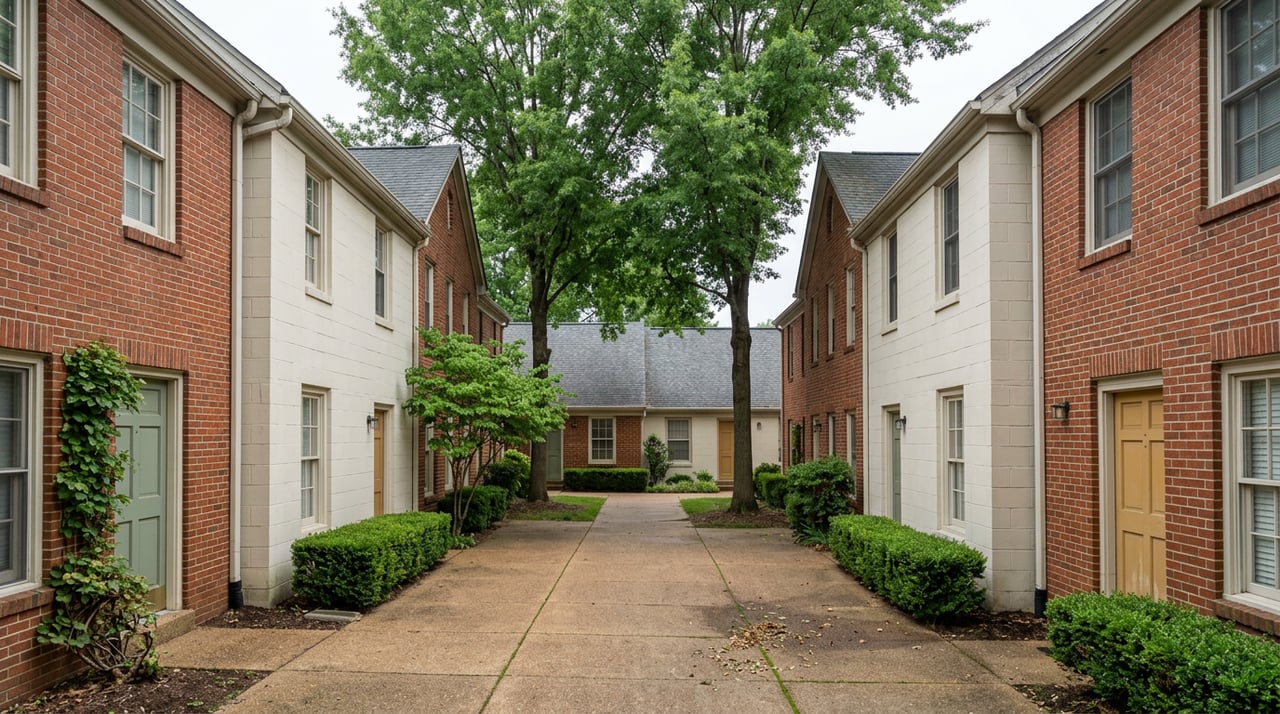
Greenbelt Homes, Inc., known locally as GHI, owns roughly 1,600 dwellings across brick, block, and frame construction, built when the federal government developed Greenbelt as a planned town in the late 1930s and later sold the homes to residents who organized as a cooperative in 1952. When you buy in GHI, you are not purchasing real property. You are purchasing a membership, meaning shares in the cooperative corporation, along with the right to occupy a specific unit under a Mutual Ownership Contract. Legally, that purchase is treated as personal property, not real estate. GHI describes itself as a market-rate cooperative, so homes sell at whatever the market will bear, but the paperwork behind the sale follows co-op rules, not the rules that govern a typical Maryland deed transfer.
That distinction is not academic. It is the reason the rest of this process looks nothing like buying a fee-simple townhome two miles away in Beltsville or Laurel.
The Loan Has to Match the Purchase
Because you're buying shares and a proprietary lease instead of a deed, a standard mortgage does not apply. Most GHI buyers need a share loan, a specialized product secured by the stock certificate and the Mutual Ownership Contract rather than by the property itself. Lenders who make these loans typically file a UCC financing statement and get a recognition agreement from the co-op, and not every bank offers this product. GHI publishes its own list of approved lenders, which includes local banks, credit unions, and cooperative-focused lenders such as National Cooperative Bank.
This is the first place buyers get tripped up. A pre-approval letter from a big national lender who has never closed a GHI share loan is not the same as a pre-approval from a lender on GHI's list. If your financing isn't lined up with a lender who already knows the drill, you can lose weeks re-starting the process after you're already under contract.
| Conventional MD purchase | GHI co-op purchase | |
|---|---|---|
| What you receive | A deed to real property | Shares plus a Mutual Ownership Contract |
| Financing | Standard mortgage | Share loan from a GHI-approved lender |
| Who approves you | Lender only | Lender, then GHI's Board of Directors |
| Screening | Credit and income | Credit, income, references, employment, rental history, and a criminal background check |
| Typical closing runway | Often 30 to 45 days | About 45 days, built around GHI's board meeting schedule |
| Cash due at closing | Down payment and closing costs | Down payment, closing costs, and a working-capital contribution equal to 1 percent of the purchase price |
The Calendar Has Steps a Normal Contract Doesn't
Once you and a seller sign a contract, the clock GHI runs on looks like this:
- Apply for financing with a GHI-approved lender.
- Attend a pre-purchase orientation, held about twice a month, which GHI requires of every prospective buyer before a purchase can be approved.
- Submit a complete membership application, including required documents and fees, within seven days of the ratified contract.
- Go through GHI's screening, which includes a personal interview, reference and employment checks, a rental history review, a criminal background check, and a look at payment and conduct history over the prior three years.
- Order your own independent home inspection while GHI confirms the seller has completed any presale repairs the co-op requires before it will schedule settlement.
- Wait for your name to go before the GHI Board of Directors at its next scheduled meeting, where membership is approved.
- Close at settlement, typically about 45 days after ratification, where the buyer, seller, and a GHI representative sign the share loan documents and the Mutual Ownership Contract together.
The presale inspection is its own education. GHI's published requirements cover storage sheds, washing machine drain lines, plumbing that must meet WSSC standards, and wiring that must comply with the National Electrical Code as amended by Prince George's County. Structural changes a member made without prior GHI approval have to be exposed for inspection before resale. None of this is unusual for a co-op, but it is unusual for a buyer used to a standard Maryland home inspection contingency, and it means the seller's to-do list, not just yours, can hold up your closing date.
This Summer's Vote Is the Clearest Example of What Membership Buys
The 121 Centerway situation shows exactly why this matters beyond paperwork. The building sits at the center of Roosevelt Center and houses the Greenbelt Co-op Supermarket and Pharmacy along with the Greenbelt Arts Center. Its owner, Glen Burnie Partners, agreed to sell it to GHI for $3.5 million, against an appraisal from National Cooperative Bank that valued it at $3.8 million. The deal as outlined would involve a down payment of roughly $875,000 and a 30-year mortgage for the balance, with rent from the building's tenants covering the mortgage payments and National Cooperative Bank as the likely lender.
Before members voted to let the board investigate further, they raised the questions any owner would want answered: how accurate were the repair cost estimates from the engineering firm that inspected the building, how hard would it be to lease the building's vacant lower level, and would the purchase push monthly co-op fees higher. GHI's president and the task force chair responded with the financial projections gathered so far, and the board stressed it had taken no position on the deal itself, only on gathering the information members asked for.
That is the part a buyer needs to sit with. When you close on a GHI home, your monthly fee and your standing as a member connect you to decisions like this one. A fee-simple homeowner two towns over doesn't get a ballot when a neighboring shopping center changes hands. A GHI member does, because the corporation you're joining owns real assets, carries real liabilities, and lets its members vote on both.
Why the Neighborhood's Price Data Won't Tell You Much
Greenbelt's own home-price numbers reflect how mixed the housing stock is. Over the three months ending May 2026, one widely used tracker put Greenbelt's median sale price at $310,000, up 5.2 percent year over year, while the median price per square foot actually fell 5 percent to $226 over the same period, and typical days on market stretched from 51 days a year earlier to 68 days. Other aggregators pulling from the same market in the same window showed figures ranging from the low $250,000s to over $310,000, depending on whether they're averaging list prices, sold prices, or a mix of GHI co-op resales, newer single-family homes in Greenbelt Park, and condos elsewhere in the zip code.
That spread is the point. A median built from co-op shares, single-family deeds, and condo units at once tells you very little about what a specific GHI unit will cost or how long it will take to close. The longer days-on-market figure lines up with what this piece has walked through: orientation dates, a seven-day application window, board meeting schedules, and presale repair sign-offs all add real calendar time that has nothing to do with buyer demand. If you're comparing a GHI listing to a conventional home nearby, don't compare the headline numbers. Ask what similar GHI units have actually closed for and how long those closings took, because that is the only comparison that reflects your actual timeline.
A Few Questions Worth Asking Before You Write an Offer
Can I use any mortgage lender for a GHI home? Not typically. Most buyers need a share loan from a lender on GHI's approved list, since the purchase is structured around shares and a proprietary lease rather than a deed.
How much cash should I plan for beyond the down payment? Budget for a working-capital contribution equal to 1 percent of the purchase price at settlement, along with standard closing costs, and confirm with GHI whether seller assistance applies in your specific purchase.
Can I rent the unit out, including as a short-term rental? GHI requires member occupancy and applies occupancy limits by bedroom count, and leasing is more restricted than in many condo buildings. If income potential is part of your plan, confirm GHI's current occupancy and rental policy directly before you assume flexibility that may not exist.
Buying into GHI can be a genuinely good fit for someone who wants a walkable, close-knit community and is comfortable trading some ownership flexibility for a lower-maintenance structure and a real voice in how the place is run. It is a different kind of purchase than a fee-simple home in Laurel or a condo near the Beltway, and treating it like a slower version of the same transaction is where buyers lose time and patience. If you're weighing a GHI listing against other options in Prince George's County, Melissa Davey can walk through what the co-op process actually looks like for your timeline and help you line up financing with a lender who already knows how GHI closings work. Schedule a free consultation before you write the offer, not after.